Where Should Your Next Yard Be?
Your delivery radius is a circle somebody drew once. Probably you, probably years ago, probably by deciding that forty miles sounded about right.
Demand does not come in circles. It comes in clusters. A town where three subdivisions went up at the same time. An industrial park on the wrong side of your boundary. A county seat forty-five miles out with no rental yard in it and a two hour round trip to the nearest one.
Your ad account has been quietly collecting evidence about those clusters the whole time it has been running. Almost nobody opens it for this purpose.
The report you already own
Start with your own geographic data, because it is yours, it is free, and it describes real people who already tried to rent from you.
Google Ads reports where your clicks and calls came from, down to the city. Open the last twelve months and sort by town rather than by campaign. Three patterns are worth finding.
Towns that produce clicks and never produce bookings. Sometimes that means your ad is wrong. Often it means those callers found out how far you are and went elsewhere. Either way, you are paying for that town already.
Towns at the edge of your radius that book anyway. This is the strongest signal on the list. Somebody drove past a closer option, or paid a delivery charge that hurt, because you had the machine. Demand reaching for you is more meaningful than demand you went and bought.
Towns you have never shown in at all, because the circle cuts them out. Those will not appear in your report, which is exactly why the next step matters.
If city level is too coarse for your market, you can get finer. Target the postal codes you care about rather than a radius, and the report will show you performance for each one. That is more setup work, and it is worth it when the question is which side of a metro the demand sits on.
What the counter knows that the account does not
Your counter staff turn down work every week. Wrong county, too far for a two day rental, delivery would cost more than the rental.
Nobody writes those down. They should.
A month of noting the address every time somebody says no is better market research than anything you can buy, because it is demand that got all the way to a phone call before geography killed it. If the same town shows up six times in a month, you have found something.
Then check the search volume in that town specifically. Keyword Planner takes a location, so run your main categories against that one town instead of your whole metro. A market can look thin inside a metro average and be perfectly solid on its own.
Test it without buying land
This is the part worth getting right, because a yard is a far bigger commitment than a machine and the cheap tests come first.
Extend the radius and price the delivery honestly. Run ads into the town, take the calls, and quote the real transport cost. Then watch what happens. If people forty-five miles out keep accepting the delivery charge, you have demand that does not need a new yard at all, you just need to serve it properly. If every one of them balks at the delivery, that is the number that makes the case for being closer.
That distinction is the whole question, and a season of quoting answers it.
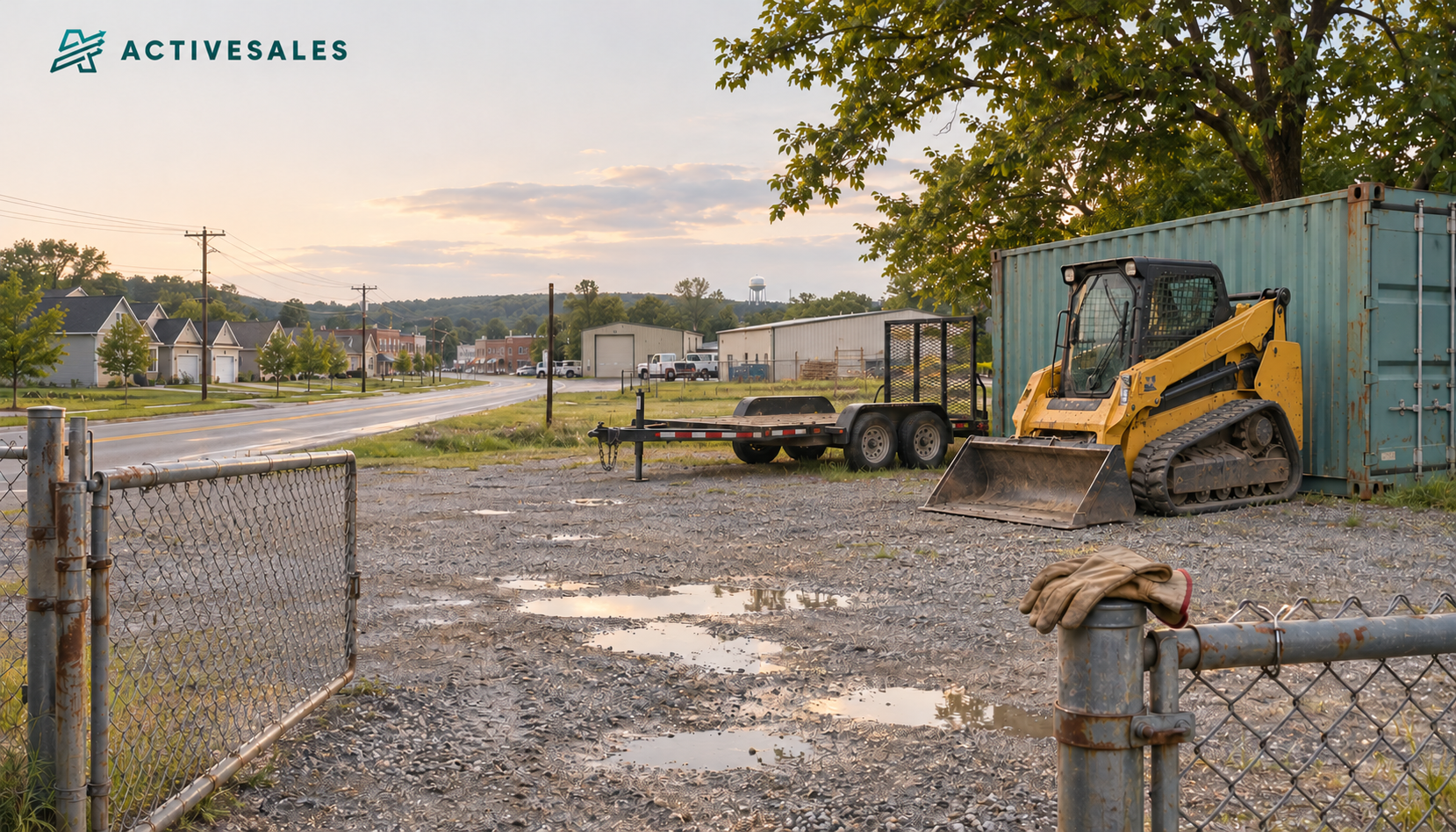
Put equipment there before you put a yard there. A drop-off point, a leased corner of somebody else's lot, a storage container with the machines that town actually asks for. It costs a fraction of a location and it tells you whether the demand is real.
Partner before you build. If another yard in that town will re-rent to you, you can serve the market, keep the customer, and find out what the volume looks like before anybody signs a lease.
Any of those three gives you real numbers. All of them are reversible, which a building is not.
Where this data stops
Be clear about the limits, because this is the mistake worth avoiding.
Search volume tells you that demand exists. It does not tell you how many yards already serve that town, whether the local contractors have had an account with one of them for fifteen years, what the property costs, whether you can staff it, or whether the construction that created the demand is a three year boom that ends.
A machine purchase you can unwind by selling the machine. A location you cannot. So treat the search data as the cheapest input you have, and the one that tells you where to look, not the one that makes the decision.
The short version
You already check demand before you buy a machine. Geography deserves the same test, and the data for it is sitting in your ad account and in your counter staff's heads.
Do this now: pull your last twelve months of Google Ads performance by city, and separately ask your counter to write down the address every time they turn down a job for being too far. Give it thirty days. If the same town appears on both lists, check its search volume on its own, then run the cheapest test you can stand before anybody mentions a lease.
We only do Google Ads for equipment rental companies. If you are weighing a second location and want to see what the search data says for that market first, we will take an honest look and tell you what we see.