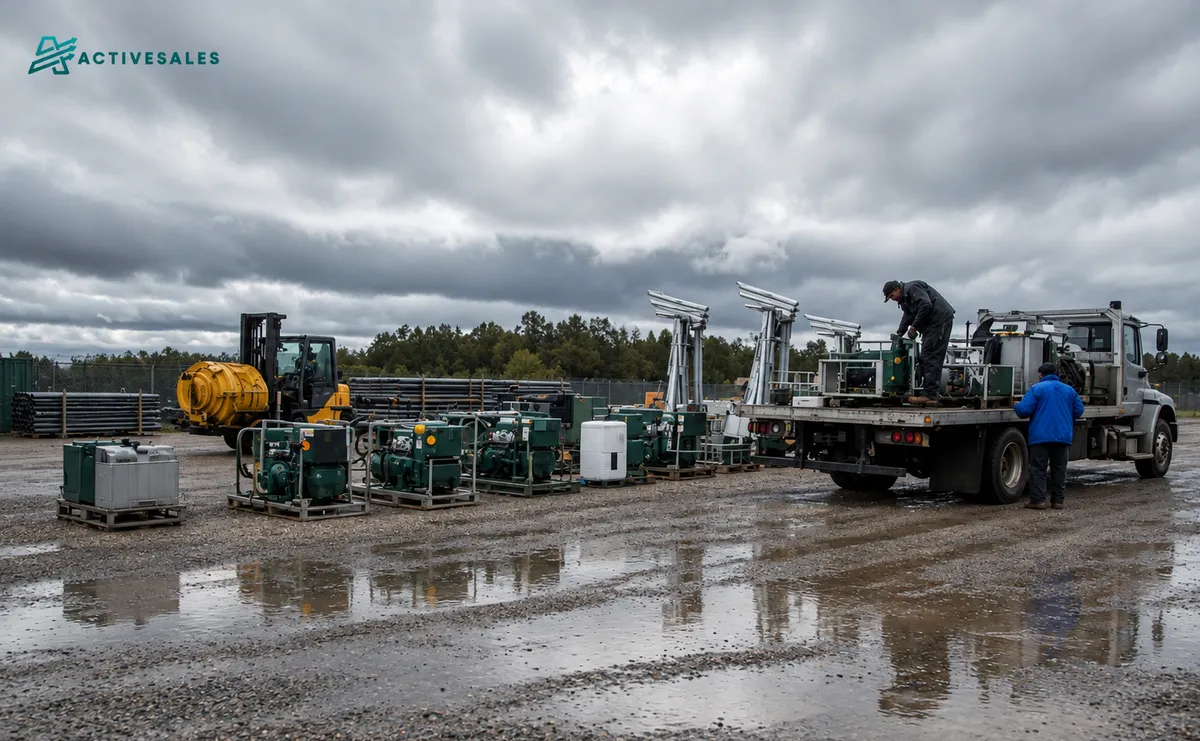
The Storm Is Your Busiest Week, and Your Ads Are Asleep For It
Every yard has a version of this story. The ice storm that took out power for four days. The remnants of a hurricane that dumped eight inches of rain on a county that never floods. The freeze that cracked pipes in half the buildings in town.
The counter remembers it because the phone did not stop. Every generator gone by noon. Pumps out the door before they were cleaned. Somebody calling from two counties over asking if you had anything, anything at all.
Now go look at what your Google Ads account was doing that week. In most accounts, the answer is: exactly what it does every other week. Same budget, same bids, same ads. The single biggest demand event of the year came and went, and the account never noticed.
This is not seasonality
Seasonality you can plan. Spring digging season, winter heaters, the summer slowdown in your market. It is on the calendar, you can build for it in February, and we have written about that before.
Storm demand is different in one way that changes everything about how you handle it. It does not ramp. It steps.
Normal Tuesday, then a warning goes out, and within hours searches for generator rental in your county go up many times over. Then, within about a week, it is over and back to normal.
Your account is built for the ramp. Daily budgets, bidding strategies learning from the last month of steady demand, a human checking in on Monday. None of that is designed for a demand curve that moves in hours.
The four ways the default setup fails you
The daily budget runs out before lunch. This is the common one. Your generator ad group has a budget sized for a quiet month. Demand goes up tenfold. You spend the day's money by 11am, and for the rest of the single best day of the year, the yard with the bigger budget gets the calls.
The bidding is trained on quiet weeks. Smart bidding learns from recent history. When cost per click triples overnight because every competitor is suddenly in the auction, a bid strategy built on normal conditions is slow to follow. It does adapt, but the adaptation takes a day or two, and the event might only last three.
The campaign is paused. Lots of yards shut off generators and heaters in the off season, which is reasonable. The problem is that the one week they are worth the most is a week nobody predicted, and nobody remembers to turn them on.
Nobody can authorize anything. The owner is at the counter, on the forklift, or driving a delivery, because it is the busiest week of the year. Meanwhile the agency, or the person who manages the account, is waiting for a reply to "should we increase budget?" By the time anyone answers, the competitors have been live for a day.
Build it before you need it
The whole job here is preparation, because there is no time to build anything once it starts.
Create the event campaigns now and leave them paused. Generators, pumps, dehumidifiers, air movers, chainsaws, light towers, heaters, trash pumps, whatever your market needs when things go wrong. Built, approved, with keywords and ads written, sitting at zero.
Write the ads in advance. Three things matter in a storm ad: that you have the machine, that it is available right now, and your hours. Nothing else. "Generators In Stock," "Available Today," "Open 7am to 7pm," phone number prominent. The rest of your usual messaging can wait for a calmer week.
Have the landing pages already live. You cannot build a page on the day. Keep a generator page and a pump page up year round, even when they get three visits a month.
Get the budget pre-approved, in writing. This is the highest leverage thing on the list, and it has nothing to do with Google Ads. One conversation with the owner, once a year: if a declared weather event hits our service area, the daily budget goes to this number without a phone call, for up to this many days. Agree the number when nobody is busy.
Watch the forecast, not the account
Your account data tells you a spike happened. It does not tell you one is coming, and it reports yesterday.
The trigger should be the weather service, not the dashboard. A watch or warning for your counties, a named storm with a track that includes you, a hard freeze advisory. Those come out a day or more ahead, which is exactly the window where being live early is worth the most, because the people searching then are the organized ones who will actually be at your counter in the morning.
There is also a sequence worth knowing, and it is two different keyword sets.
Before the event, people search for preparation: generators, fuel cans, light towers, plywood, heaters. After the event, the searches change to recovery: pumps, water extraction, dehumidifiers, air movers, chainsaws, dumpsters, debris. If you only build one campaign, you catch half of a week that happens a few times a decade.
Then turn it off
The spike ends faster than it began, and the campaign that saved your week becomes the campaign that quietly wastes money.
Once power is back and the water is gone, searches fall off within days. Anything left running at storm budget after that is paying premium prices for people who are just browsing. Pause it, write down what you learned, and leave it ready for next time.
The short version
Storm demand is the one spike your calendar cannot predict and your account is least prepared for. The win is not clever bidding during the event. It is having campaigns built, pages live and a budget number already agreed before anyone looks at a forecast.
Do this now: while nothing is happening: build your event campaigns, leave them paused, and send your agency one message agreeing what the budget becomes when a warning is issued. It takes an afternoon, and it only has to pay off once.
We only do Google Ads for equipment rental companies, including the ones that sell as well as rent. If you want a second set of eyes on your account, we will take an honest look and tell you what we see.