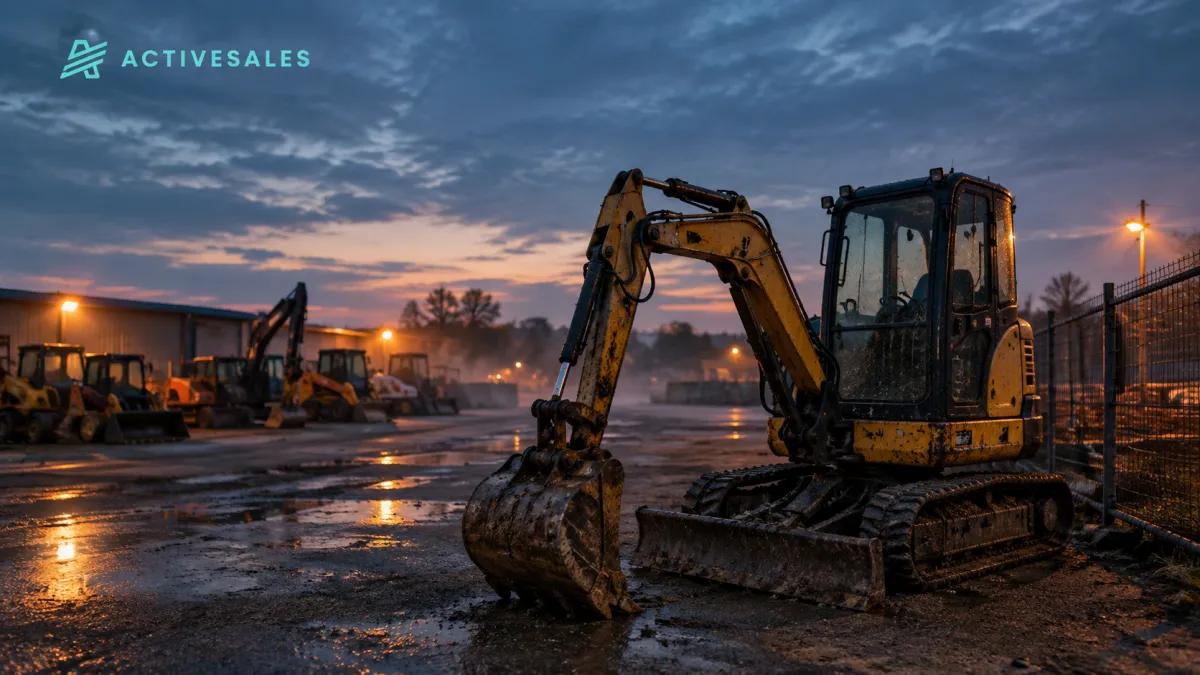
Check Google Before You Buy the Next Machine
You would never buy a used excavator without walking around it first. You check the hours, the undercarriage, the pins and bushings, the service records. It is a lot of money, and the machine has to earn it back one rental at a time.
Then the same owner decides to add a new category to the fleet because a contractor asked for it twice last spring, or because the dealer had a good price, or because the yard across town seems to rent a lot of them.
That is at least a $60,000 decision made on a hunch. And the cheapest piece of market research you will ever get is sitting in Google, free, waiting for someone to look.
Searches are customers raising their hand
Every time someone types "trencher rental near me," they are telling you three things: what machine they want, roughly where they are, and that they want it now. Google keeps count.
That count will not tell you everything. But it answers the first question any new machine has to pass: are people in your area actually looking for this, and how many of them?
Google's Keyword Planner, inside your Ads account, shows monthly search volume by keyword and by location. Type in the machine you are considering, set the location to the ground your yard actually serves, and look at three things.
How many searches. Not nationally. In your delivery radius. A category with strong numbers across the country can be close to zero in your county.
How the searches move across the year. Keyword Planner shows twelve months of history. A machine that gets steady searches all year is a different investment from one that gets all of its demand in six weeks of spring, when you would be competing with every other yard for the same renters.
What a click costs. The suggested bid is a rough read on competition. If "boom lift rental" in your city costs several times more per click than "scissor lift rental," that is Google telling you somebody else is already fighting hard for those customers.
Your own account already knows what you don't carry
Keyword Planner is the public data. The better data is in your own account, and almost nobody looks at it this way.
Open your search terms report for the last twelve months and look for machines you do not own. Every rental account we manage has them: people searching for stump grinders, boom lifts, light towers, dump trailers, and clicking the ad for a yard that has none.
Usually those terms get added to the negative keyword list and forgotten. That is the right move for your ad spend. But before you block them, write them down. Your negative keyword list is a record of what your customers asked for that you could not rent them.
If the same machine keeps showing up month after month, that is not a keyword to ignore. That is a customer request you have been turning down for a year.
The same goes for your phone calls. If you record your calls, your team already knows which requests they hear most often and have to answer with "sorry, we don't carry that."
Turn the searches into rough rentals
Search volume is not revenue, so do the arithmetic before you get excited. Here is an example with round numbers, not a client result.
Say there are 200 searches a month for a machine in your area. Your ad shows up and wins 40 clicks. One in eight of those clicks turns into a call or a quote request, so 5 leads. Your counter books about half. That is 2 or 3 rentals a month from paid search alone.
Now put that next to the machine. What does it rent for per day and per week, how long is a typical rental, and how many rentals a month does it need to cover the payment, the maintenance and the transport? If the search math and the payback math do not meet somewhere reasonable, the dealer's good price is not a good price for you.
Paid search is not your only source of rentals. Repeat contractors, walk-ins and your Maps listing all add to it. But if the searches cannot carry a meaningful share of the load, you are counting on everyone else to pay for the machine.
Test it before you buy it
The strongest version of this is not reading the numbers. It is running a small test.
Plenty of yards already re-rent equipment from a partner when a customer needs something they do not have. If you can source the machine that way, run a small, tightly targeted search campaign for it for 30 days. Real ad, real landing page, real phone calls.
At the end of the month you are not looking at an estimate anymore. You have actual clicks, actual calls, and actual contractors asking actual questions about delivery and rates.
If the phone rings, you have a buyer's case built on your own market. If it does not, you just saved yourself a machine that would have spent the season parked at the back of the lot.
A few hundred dollars of ad spend is a very cheap insurance policy on a five-figure purchase.
The short version
Most agencies only look at search data after you own the machine, to figure out how to advertise it. The time it is worth the most is before you sign for it.
Do this now: pull the last twelve months of search terms from your account and list every machine people searched for that you do not carry. Pick the one that shows up most, check its local volume and seasonality in Keyword Planner, and run the rough rental math above. It takes an afternoon, and it may tell you which machine to buy next, or which one to walk away from.
We only do Google Ads for equipment rental companies. If you are thinking about adding a category and want to see what the search data says for your area first, we will take an honest look and tell you what we see.